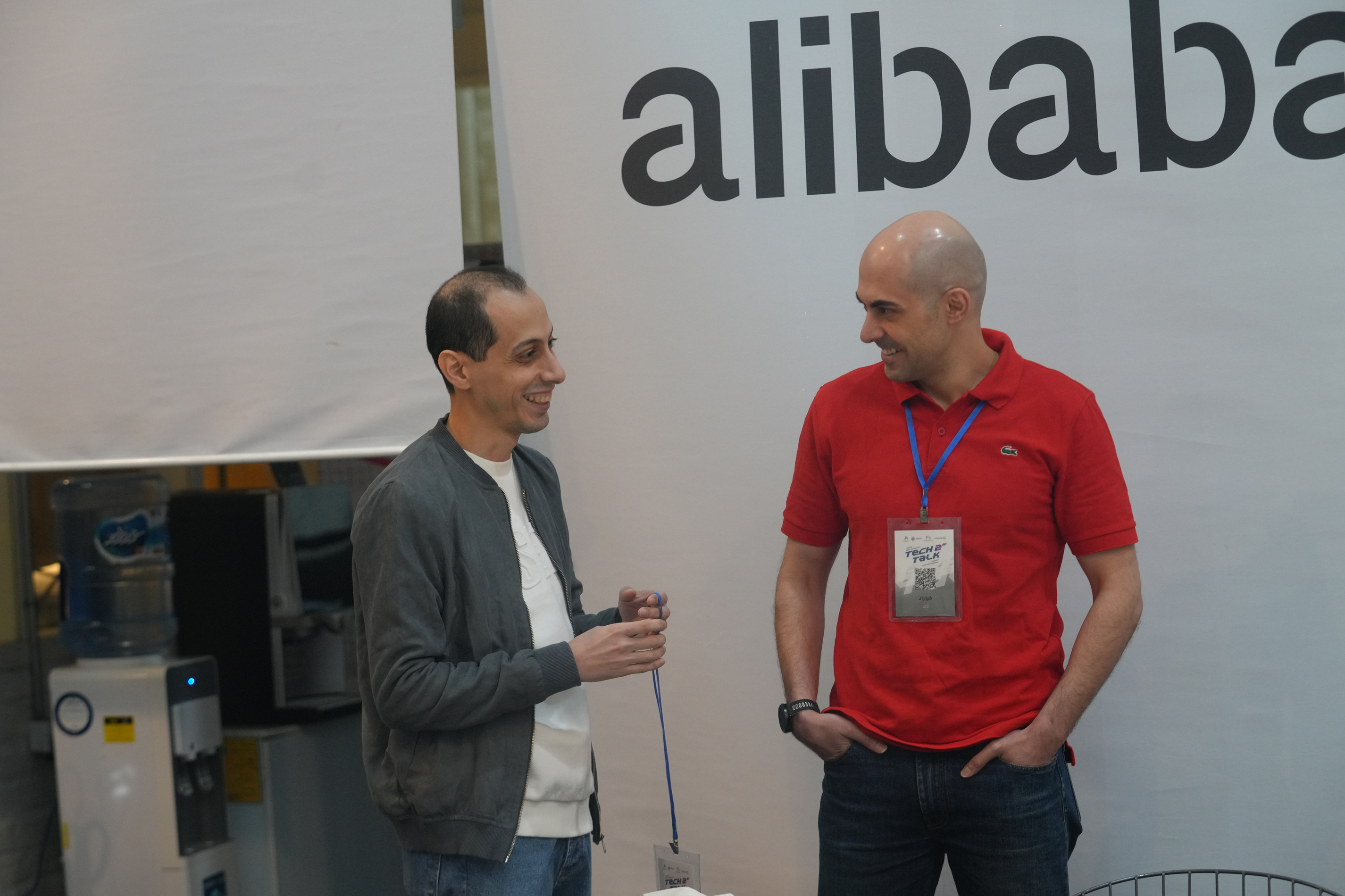
A few days ago I attended a small, invite-only tech gathering hosted by Cafe Ertebat. Think of it as a low-key salon: about a couple dozen people, all of them with at least a decade of experience, almost all with shiny titles: CTOs, VPs of Engineering, technical leads, founders.
It was the kind of room you’d expect to be intimidating.
It wasn’t.
And that was the interesting part.
Walking into an “Elite” Room
I was invited through two friends and colleagues who referred me to the host. That alone set a certain expectation in my head: if this is curated, and everyone is hand-picked, then the conversation is probably going to be sharp, opinionated, and uncomfortably insightful.
The main announced topic was Architecture and Scalability - one of those themes that can either trigger deep, hard-earned war stories or dissolve into buzzwords within minutes.
We started with a loosely structured discussion. People shared thoughts on monoliths and microservices, database scaling, performance issues, “best practices”; all the usual suspects. Every few minutes someone would drop a familiar phrase:
- “We had to rewrite the legacy system.”
- “Microservices gave us more flexibility.”
- “We just scaled horizontally.”
Nothing was wrong, exactly. It just felt… familiar. Safe. The kind of surface-level take you’d hear in a broad conference panel, not in a supposedly elite, invite-only circle.
The Seniority Illusion
At some point I caught myself thinking:
“If this is the most ‘senior’ group we can assemble, what does senior even mean anymore?”
Years of experience? Title on the LinkedIn profile? Company logo on the CV?
On paper, almost everyone in the room was “very senior”. In practice, the depth of the conversation often stayed near the edges. We skimmed across architecture and scalability more than we really dove into it. The kind of questions that expose painful trade-offs, structural regrets, or long-term bets were rare.
To be clear: this is not a complaint about people being incompetent. Far from it.
What I noticed was something subtler: seniority in our industry is often more about breadth of exposure and organizational survival than about deep, reflective thinking. Many of us are so busy shipping, firefighting, and managing that we don’t always get the time - or the psychological safety - to sit with the uncomfortable questions:
- What architectural decisions are we consciously deferring - and why?
- What does scalability really mean for our specific business model, not in generic terms?
- Where are we trading true resilience for the illusion of “modernity”?
In that room, I realized how easy it is to project depth onto a crowd based on titles, and how quickly that illusion can dissolve when you really listen.
A Networking Break That Wasn’t Just Small Talk
In the middle of the event, we had a networking break - people scattered around the room in small circles, talking about everything from cloud platforms to random non-tech topics.
These kinds of breaks can go either way: awkward small talk, or surprisingly meaningful conversations. This one leaned toward the latter.
At some point I found myself talking to someone about observability, tracing, and how painful it can be to make distributed systems actually understandable. Then the conversation drifted into .NET, instrumentation, and OpenTelemetry… and it turned out he was an open-source contributor working on almost the exact same areas I’ve been investing time in.
Same tech stack, same corner of the ecosystem, similar mental models.
That was the moment the event clicked for me.
Up to that point, I was mentally scoring the day based on the collective “panel discussion” quality. After that conversation, I remembered something important:
Even if the room discussion is shallow, the one-on-one connections can be ridiculously high value.
We swapped stories, compared notes on instrumentation patterns, and floated a few ideas about potential collaboration. Nothing concrete yet, but the alignment was clear. If anything good comes out of that day, it will probably be from that one conversation - not from the official “talk”.
Adjusting My Expectations of Community
On the way back home, I kept thinking about the gap between my expectations and what actually happened.
I had walked in expecting a “council of elders” where everyone drops profound insights about scalable architectures, the sociology of large engineering organizations, and the trade-offs that only appear at serious scale.
What I got instead was:
- A fairly typical set of surface-level talking points on architecture and scalability.
- A reminder that titles and years of experience don’t automatically translate to depth.
- A surprisingly valuable personal connection with someone whose open-source work overlaps tightly with mine.
- A broader, softer kind of value: expanding my network into circles I wasn’t previously part of.
In hindsight, that’s still a solid outcome.
Maybe the mistake was assuming that “invite-only” and “senior titles” automatically imply a certain intellectual depth. In reality, communities like this are often entry points, not final destinations. They’re a way to discover who you might want to dive deeper with later, in smaller, more focused settings.
On Being Less Harsh (Including with Myself)
It would be easy to turn this into a cynical post:
“The so-called senior crowd doesn’t know what it’s doing.”
That’s not what I believe, and it’s certainly not what I want to signal.
Most people in that room have spent years navigating messy realities: legacy systems, incomplete data, business pressures, team constraints, hiring gaps, shifting roadmaps. It’s very different from a neatly defined architecture interview question or a polished conference talk.
Sometimes, when you throw a group like that into a room and say, “Let’s talk about scalability,” what you actually get is a collage of anecdotes and buzzwords. Not because they’re shallow people - but because there’s no shared context, no shared system, and no shared stakes.
Depth often requires specificity:
- This system,
- with these constraints,
- in this company,
- at this moment in time.
You don’t get that in a two-hour multi-speaker gathering over coffee.
So instead of being harsh on “the community”, I pulled the lens a bit closer and asked myself:
- Did I ask the kind of questions I wish others had asked?
- Did I try to bring the discussion one layer deeper, or did I just silently judge it?
- Did I contribute anything that I myself would consider “senior-level depth”?
The honest answer: not as much as I could have.
What I’m Taking Away
If I compress the day into a few takeaways for myself, they look like this:
Seniority is not a guarantee of depth. Titles and years of experience are rough proxies at best. Real depth shows up in how people frame problems and trade-offs, not in how their job title sounds.
Events are for discovery, not completion. The big-group discussion is rarely where the deepest value lives. The real gold often hides in side conversations, follow-ups, and the people you decide to keep talking to after the event is over.
If I want deeper conversations, I have to help create them. That means asking better questions, sharing more concrete stories, and being willing to expose my own uncertainties instead of waiting for others to impress me.
Most importantly: I walked out with at least one strong connection that I genuinely want to invest more time in - someone who lives in the same corners of the open-source world that I do, especially around OpenTelemetry for .NET.
For a single day at “Cafe Ertebat”, that’s not a bad return.
In the end, the event was less of a masterclass on architecture and scalability, and more of a quiet reminder about how our industry actually works: imperfect people, carrying complex systems on their backs, doing their best with the time and context they have.
And occasionally, if you’re lucky, you bump into someone who’s been walking a path very similar to yours - and that alone can make the whole thing worth it.